Pragmatic thoughts on how to keep a remote team ticking…

The energy of a team is contagious! The chatter, the debates, the extra long hours spent chasing an unrealistic release timeline and the energy generated in the process is just unmatchable!
While co-location plays a vital role in facilitating an environment of positivity and breeding ‘Emotional contagion’ within the tribe, it is NOT always an option for teams with a global footprint. Remote teams can be equally effective, but only with the help of right practices and the ability of the leaders to pick the right problem worthy of solving. The good news is that the technology at our disposal encourages a robust ecosystem of services and tools to get one going!
Around 2 years ago, when I got started with the responsibility of bootstrapping a whole new team of UX designers who would work remotely at various customer locations spread across the US and India, I never thought in my wildest dreams that all the wisdom I’ve gathered till then building co-located teams were just not enough for my job ahead!
I would break down the essentials in the process into 6 bucket lists and here is how they look like:
- ‘Cultural divide' and ‘Design culture'
- Team Engine
- Collaboration
- Peer-review mechanism
- Team language
Now let me put each of the categories into perspective with the help of a demonstrative example of how we are tackling and getting on top of each of them!
‘Cultural-divide’ and ‘Design culture’
Often an enterprise-level UX team has to fight for its identity by evangelizing UX across teams and talking about the benefits of adopting design methodologies. It ultimately has to become the flag-bearer/exemplar of design-thinking throughout the lengths and breadth of the organization.
More than getting design work done, it’s often ‘talking’ about design and processes involved that a team ends up doing if it has to bring about any impact in the bigger organisation.
To be able to do this, the prevalence of a strong design culture within the team is pivotal and being remotely operated makes it much more daunting an ask! Add to that the ‘cultural-divide’ that comes with having teams from diverse cultures/geographies.
This is how we handled it…
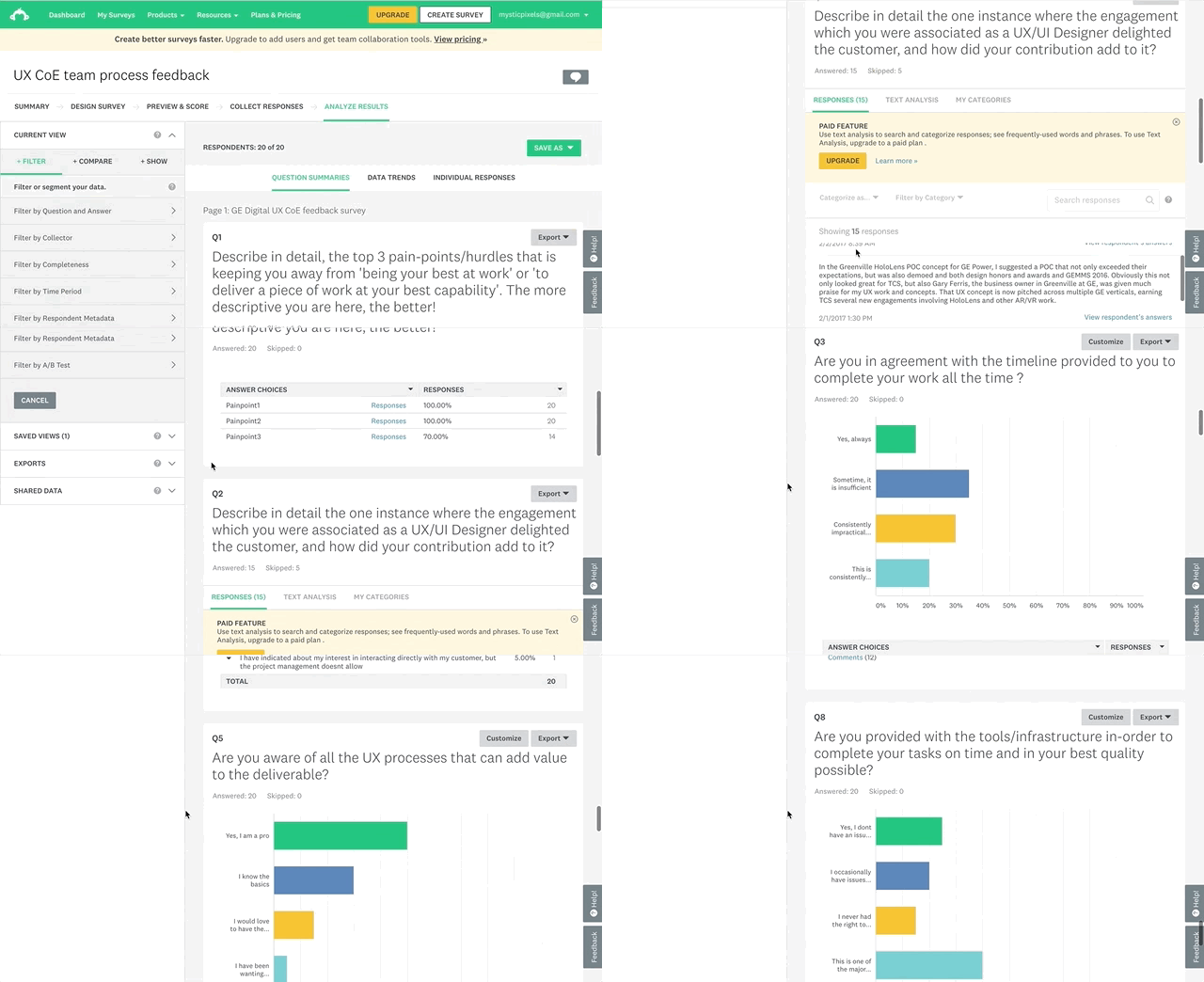
Culture mapping: In order to bring a team of diverse culture together, it is important to understand the values, differences, tastes, dynamics of each of the individual subsets. A culture mapping exercise (read more about it here and thanks to Don for leading this exercise), helped us to get to the details of any kind of change/resistance, and act accordingly. We started with a simple SurveyMonkey survey, and this exercise ended up being an eye-opener revealing a lot of otherwise hidden facts about the team and areas of improvement (will be writing in detail about this as a future story).
The weekly team meets: Conversations play a crucial role in bringing a team to common grounds, and a remote team thrives on the support of platforms nurturing conversations. A weekly team meeting with carefully woven out agenda is one of our platforms to promote conversations and bring the tribe rallying around common ideologies.
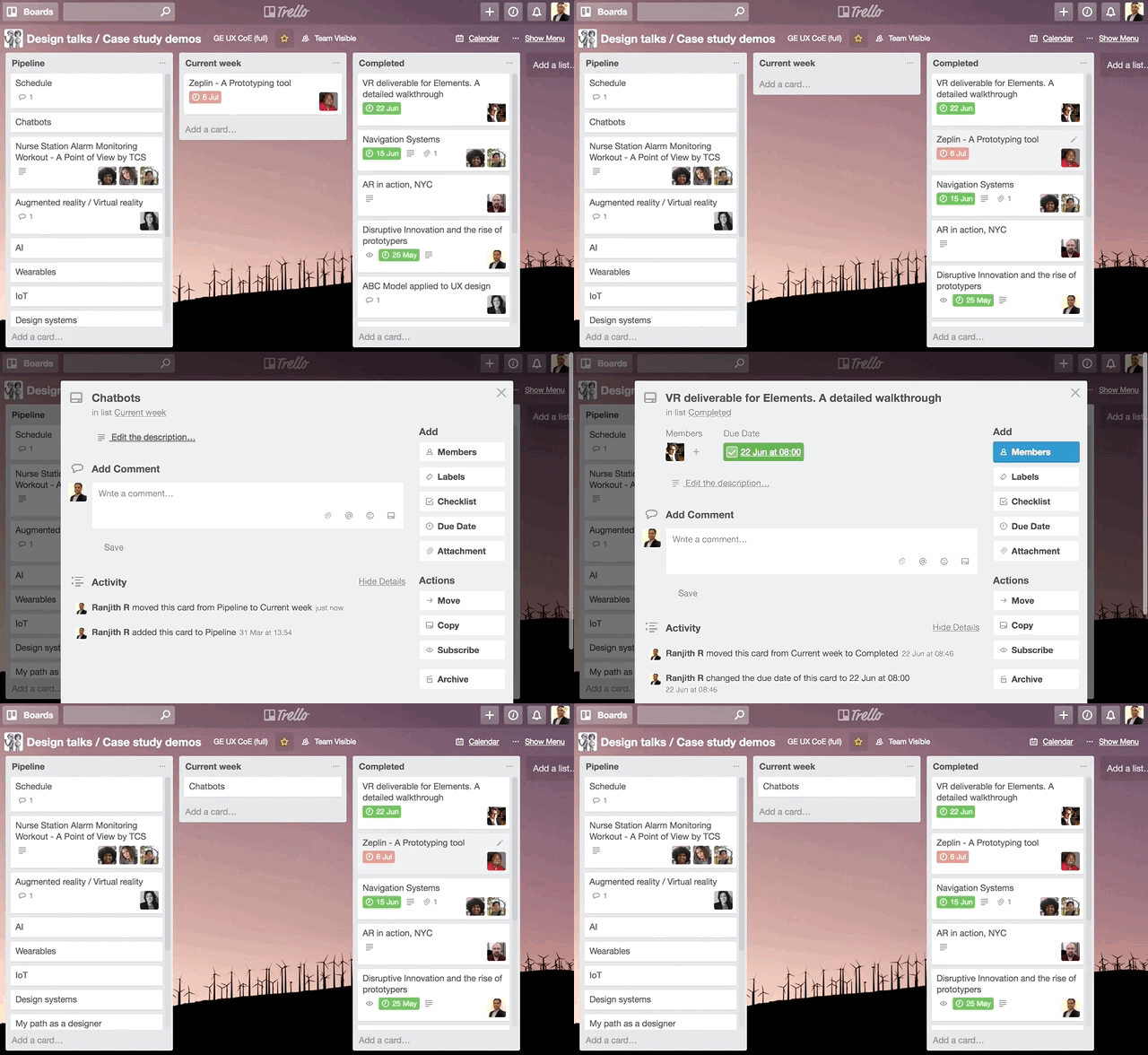
Design talk sessions: Every week, a team member is responsible for sharing an enlightening topic with the whole team. There is no strict rule for topic selection; from tools to a recent event — the talk is an open-minded discussion. This type of open-ended sessions always helps the whole team peek into the minds and surroundings of peers and helps bridge the cultural divide to an extent and promote knowledge sharing.
(the team makes use of Trello to manage the design talk schedules regularly)
Team engine
This is the driving force behind the team’s activities, and this ‘core team’ is what keeps the whole bunch ticking in the right direction. From setting milestones, scheduling key meeting sessions with the right participants, taking decisions on the new tool to be procured to handling escalations ‘like a boss’ — this group is an inevitable part of the bigger team.
IMHO a balanced ‘core team’ should include
- Experienced practitioners with diverse perspectives and an open-minded approach!
- Relatively new faces in the team who can bring in a fresh perspective to the discussions and make sure there is no stagnation of ideas and practices within the team. They are a vital part of the team, as our’s is a domain which involves radical changes to approaches, tools and challenges frequently, and we need minds which can absorb and apply the same for the well-being of the whole team
- Enthusiastic newbie designers in the team always pump fresh blood to the initiatives and keeps the enthusiasm going on a regular basis. Having a smart newbie as a part of the core team ensures we don’t miss a much-needed perspective.
Collaboration
A team can’t afford to give this part a miss, and this is the part I loved the most while figuring out a solution for! The average tech-savviness of a team often sets a team apart in this aspect. From getting work done as a team to building an ‘always connected’ culture, the time can’t be any better than now!
This is how we collaborate…
Tools: With world-class tools and platforms galore, this was never a problem. The first choice was Slack, but being an enterprise team, ‘Information Security’ forced us to distance ourselves from the cloud-based platform. Being part of a top-class IT consulting enterprise has its own advantages :) — we had the luxury of using our own internal collaboration platform which follows the line of slack and contemporary counterparts.
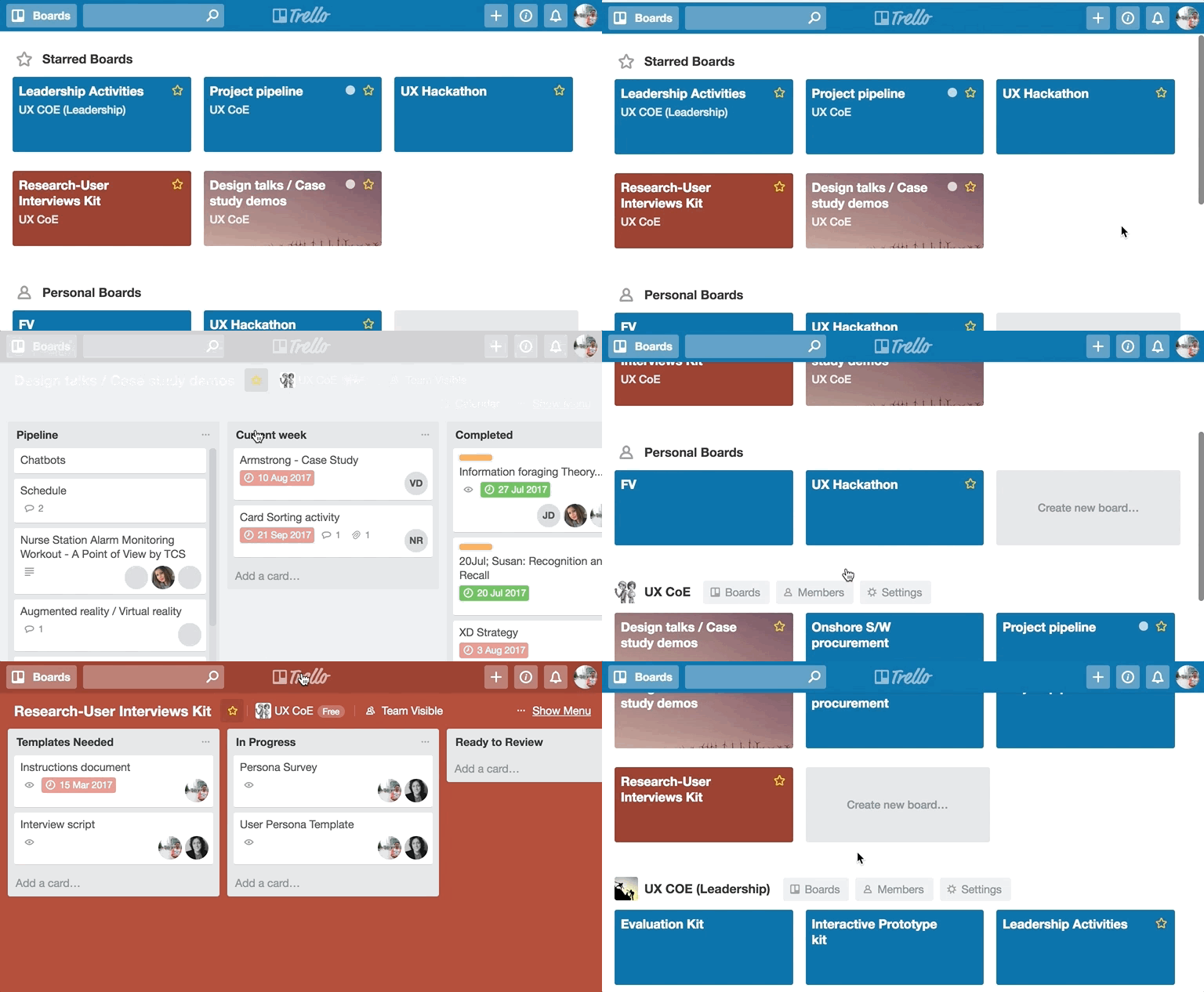
Trello plays a major role in the collaboration activities of my team. From maintaining boards for weekly design talks to steering the core team activities, Trello as a Kanboard tool comes in handy to track and make steady progress.
Peer-review mechanism
Designers can be terrible critique managers; we designers are known for inability in handling criticism. But the truth is — a good UX team thrives on strong peer-review culture!
A design is only as good as its reviewers
Personally, some of my key learnings as a UX designer has come from peer-review sessions and no matter how bad a design review session goes, I have eventually learned to walk away from one becoming a better person/designer, or both. When it comes to a team, setting up a mechanism to culturally make peer-review part of the design process is no doubt an uphill task. But with enough research and result-oriented leadership, you could figure out a perfect peer-review mechanism for your team.
This is how peer-review is done in our team…
‘Reviewer’s corner’ — a group which we formed in our internal collaboration platform is the heart of our peer-review culture. Everyone is encouraged to post their to-be-reviewed work in that group which is open to the whole team. A selected set of designers (they constitute our ‘Review Committee’) are responsible for keeping the review standards high and they are the gatekeepers ensuring the review process gives a fair playground to all equally. This way it is a transparent process, and every single review is a learning for not only the designer involved but for the whole team.
Team language
The success of a team always depends on how fast and efficiently things get done — whether it is getting a design out or setting up a team meeting; the collective effectiveness is what matters! With culture, language and proximity widening the gap for remote teams, establishing coordination become way too tedious.
Getting the whole team to talk in a single language is the holy grail of team productivity!
This requires a stable cycle of practices and ardent participation of the whole team. Diving deeper into this topic is going to be a pandora’s box affair and I don’t intend to do that now. So, here is a simple checklist I have put together to keep the team on-track.
- Build the vocabulary
Style guide or Redline Document? Hi-Fidelity screens or Visual Mockups ? Wireframes or Low-Fidelity screens? Define each deliverable, come to a mutual understanding what terminologies will be used to refer to an artefact, process or a methodology. This definition exercise becomes the heart of the team’s language eventually. Good luck! - Create a syllabus
Enable the team to hit the road by providing a pool of kick-starter artefacts. Come up with a set of templates/bootstrap artefacts/starter kits to accelerate adoption. This not only sets a consistent bar but also facilitates a common ground for individuals and groups to improvise and contribute to the ecosystem still maintaining the core values. - Facilitate conversations
Conversations fortify a language and facilitates improvisation. The collective wisdom of a team often shows up where freedom of expression is guaranteed and bred. So, create platforms and space to encourage design-based conversations. Majority of innovations that we have converted to working drafts originated as sparks of ideas generated from such conversations — let them happen! - Consistently curate and update
Building a set of vocabulary and artefacts is just the beginning. Constant review, update and refining keeps the language contemporary and effective. Setup consistent checkpoints and meetings targeted towards the incremental development of the language. Setup weekly or bi-monthly meets to review and reflect upon the team progress holistically and keep an eagle’s eye-view.
Conducting surveys is an interesting way to collect feedback too anonymously, which has worked well in our case. There are numerous ways out there to get consistent feedback … go put on a researcher’s hat and get going!
Building a team is a long-term process, and the learning never ends. Although techniques and tools burgeon with time, the core ideology of a team-building exercise remains unchanged — ‘bringing collective consciousness together’. Good luck!
‘Handling a global UX team ’ — taking the bull by its horn! was originally published in UX Collective on Medium, where people are continuing the conversation by highlighting and responding to this story.