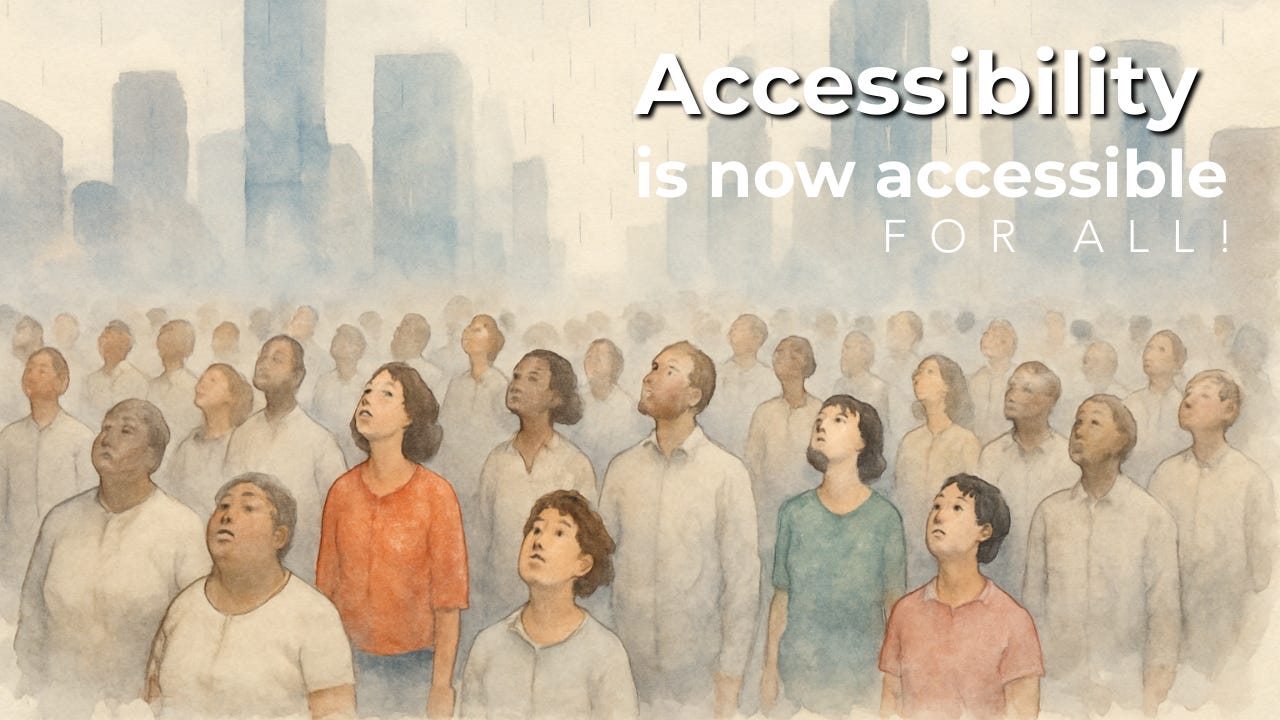
A couple of days ago, a product manager from one of our enterprise clients pinged me on Slack. “Can we please make sure this new feature is accessible in general?”
We don’t have an accessibility team. Neither does the client. We just don’t have the budget to onboard specialist accessibility testers or experts. But what we do have is a set of diligent practices, checklists and some best-in-class frameworks that take accessibility seriously. So the answer was always a YES!
But often, accessibility takes a back seat in most teams, unless there are compliance obligations involved (ADA, Section 508, EAA, ACA, DDA) that require a degree of WCAG compliance!
Accessibility has always been the “nice to have” that’s actually a MUST HAVE
Everyone knows accessibility matters. And most enterprise clients—the ones without massive design orgs—don’t have room for full-time accessibility specialists.
So what happens?
Accessibility just becomes a fire drill
Accessibility is an on-demand service!
An accessibility expert isn’t needed in every standup; if the team is diligent enough to follow the right checklists, use the right frameworks, and design systems, 80% of accessibility is already handled. There are some specific moments when we need them:
Design system audits
Major releases
Public-facing products (B2C, C2C)
Compliance certifications
At Esperia, what we figured was - if we are able to tighten the guardrails and processes to integrate accessibility-compliance right into the product lifecycle, the 80% can move up to 90%, and we already have robust compliance. Here is where AI can play a real game-changing role!
A real AI usecase
AI steps in most effectively in situations like these:
AI agents running contrast checks on every design file
Prompts configured to flag WCAG violations during review
Automated accessibility annotations generated before handoff
Just-in-time answers when designers have questions
Accessibility checklists for the QA team and agents to help them do their job better
But, yes! AI doesn’t handle everything.
There’s a reason accessibility experts exist:
Legal interpretation
Cognitive accessibility
Screen reader nuances
Edge cases that require human judgment.
AI handles the 80%. Humans handle the 20% that actually needs them. The future is when the role of an accessibility expert shifts from “checker” to “strategist.”
Accessibility as a service
For design agencies like ours, this changes the game.
With the right strategic use of AI, accessibility becomes a differentiator.
We can serve regulated industries—banking, healthcare, government—with confidence. We can offer “Accessibility-as-a-Service” without enterprise pricing. We can reduce liability without increasing overhead.
The clients who couldn’t afford accessibility can now do so!
Let’s connect if you have a viewpoint!
If you have a strong viewpoint on this, or if you are looking to work with a design team that takes accessibility seriously, let’s connect!